The Silent Salesperson: How Your Website Sells Even While You Sleep
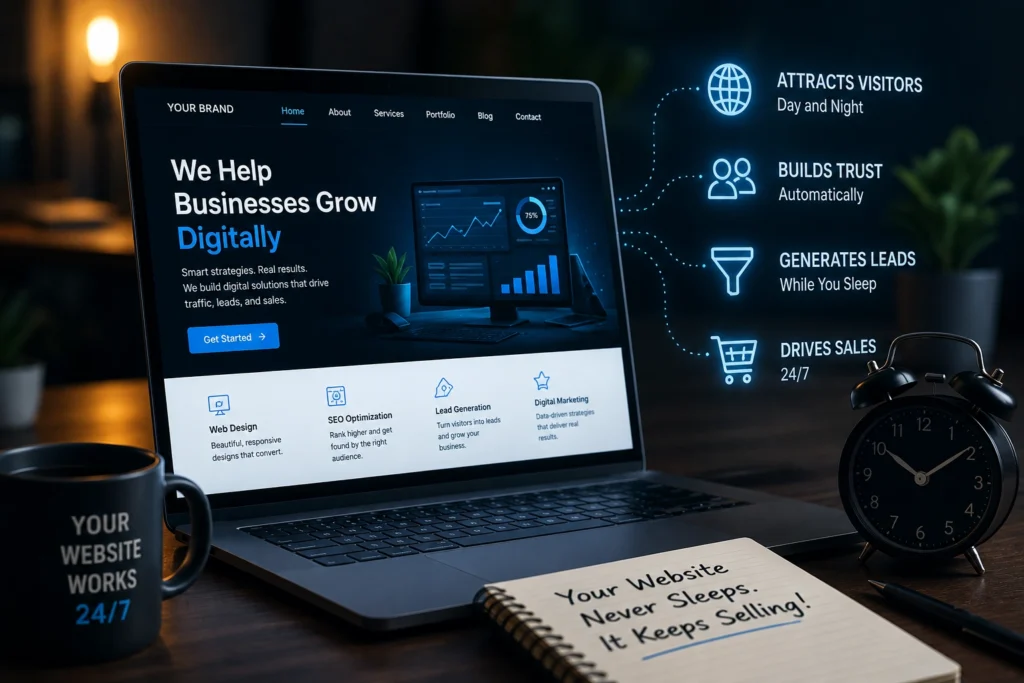
Why Every Business Needs a Website That Works 24/7 Introduction: Your Website Never Sleeps IA company website is much more than an online brochure in today’s digital-first economy It is a powerful business asset that represents your brand, communicates your value, and influences customer decisions around the clock. While employees finish their workday and physical stores close their doors, a professionally designed website continues working without disruption.As a result, companies who make an investment in a high-performing website have the chance to draw in customers, create leads, and boost revenue every single hour of the day. Moreover, modern digital marketing has transformed the role of websites. Customers no longer wait to speak with a salesperson before making purchasing decisions. Instead, they search online, compare competitors, read reviews, and evaluate businesses independently. Therefore, your website often becomes the very first interaction potential customers have with your brand. If it creates a positive first impression, visitors are more likely to trust your business and take the next step. Section 1: The First Impression That Shapes Every Customer Decision Research consistently shows that people form opinions about a website within a matter of seconds. During this brief moment, visitors decide whether your business appears trustworthy, professional, and capable of solving their problems—whether they visit directly or click through from your social media channels. Consequently, design, intuitive navigation, fast loading speed, and brand consistency across social media play a crucial role in successful digital marketing. Furthermore, first impressions shape every stage of the customer journey and reflect the strength of your broader marketing strategies. A clean layout, compelling headlines, and seamless integration with social media marketing encourage visitors to explore your offerings further. Conversely, slow-loading pages or confusing designs waste traffic generated by your digital marketing strategies. Investing in professional website design, alongside active social media marketing, is essential for building a successful digital presence—making it not simply an aesthetic decision, but a high-impact digital marketing investment. Section 2: A Website Works Around the Clock Unlike physical stores that operate during fixed business hours, your website remains available twenty-four hours a day, seven days a week. Whether a visitor arrives early in the morning or late at night—driven by your social media marketing campaigns or direct searches—your website continues answering questions, showcasing services, and guiding potential customers toward meaningful actions. Additionally, businesses increasingly serve customers across multiple time zones and geographic locations. While your team may be offline, a well-built website continues generating inquiries, collecting contact information, processing purchases, and educating prospects. Designed by a skilled digital marketing strategist, your website becomes the core engine of your successful digital marketing framework. Ultimately, under the guidance of an experienced marketing strategist, this 24/7 online presence establishes a successful digital foundation—acting as a silent salesperson that never requests a break, never misses an opportunity, and never stops representing your brand. Section 3: Building Trust Before the First Conversation Trust is one of the most valuable assets in digital marketing strategies, and your website plays a central role in earning it. Before contacting a business, customers often explore its website—as well as its active social media channels—to determine credibility. They evaluate company information, authentic client reviews, case studies, certifications, and portfolio work shared across social media. Therefore, aligning your website with proven marketing strategies reassures visitors that they are making the right decision. Moreover, transparency strengthens customer confidence and forms the backbone of successful digital branding. Clear service descriptions, professional imagery, and seamless integration with social media marketing demonstrate reliability and openness. When businesses communicate honestly and consistently through their website and social media, they create stronger emotional connections with potential clients. As a result, applying these marketing strategies makes visitors feel far more comfortable submitting inquiries, requesting quotes, or completing purchases. End of Part 1 A successful website does far more than display information—it creates first impressions, builds trust, and generates business opportunities around the clock. As digital marketing continues to evolve, companies that treat their websites as strategic growth tools rather than simple online brochures gain a significant competitive advantage. Section 4: Turning Website Visitors into Loyal Customers Attracting visitors to your website is only the beginning of the customer journey. The true successful execution of digital marketing strategies lies in converting those visitors into loyal customers. A high-performing website—supported by active engagement on social media channels—guides users naturally through each stage of the buying process by providing relevant information, answering common questions, and encouraging meaningful actions. Consequently, aligned with overall marketing strategies, every page should have a clear purpose and a compelling call-to-action that motivates visitors to take the next step. Furthermore, customer trust develops through consistency, value, and strategic social media marketing. Businesses that offer informative content, engaging visuals, and seamless navigation across their website and social media channels create a positive user experience that encourages visitors to return. Every connection built through integrated marketing strategies should bring customers closer to developing a long-term relationship with the business, whether the ultimate successful outcome is to make a purchase, request a quote, or subscribe to a newsletter. Section 5: Search Engine Optimization Brings Customers to Your Doorstep Even the most beautifully designed website cannot generate results if people cannot find it. Therefore, Search Engine Optimization (SEO) plays a vital role in every successful digital marketing approach alongside effective digital marketing strategies. By optimizing website content, targeting relevant keywords, and sharing valuable resources across social media channels, businesses increase their search engine visibility, drive organic traffic, and amplify their social media marketing efforts. Moreover, combining SEO with smart marketing strategies is a long-term investment for a successful digital presence. While paid adverts stop generating leads once the budget expires, a well-optimized website—supported by active social media engagement and strategic social media marketing—continues to attract potential clients naturally. As rankings and social media reach improve, businesses build unmatched credibility, boost website traffic, and establish themselves as trusted industry authorities. Section 6: User Experience Is the Hidden Sales Strategy A successful website is not defined solely